Not every expensive house feels luxurious, and not every luxurious home is expensive to look at. That distinction is the whole game in luxury villa design — it’s never really about square footage or the price tag on the marble; it’s about how deliberately every inch of the property was considered before a single wall went up. At Archtra, we’ve walked through villas with jaw-dropping budgets that still felt hollow, and modest hillside homes that felt like a five-star retreat the moment you stepped through the door. The difference always comes down to the same handful of design decisions repeated with discipline. This guide walks through the ten features that consistently separate genuine luxury villa design from a house that simply cost a lot to build — and how to think about each one if you’re planning your own.
What Makes Luxury Villa Design Different From a Regular Home
Before the list, it’s worth naming the underlying principle: luxury villa design treats space, light, materials, and privacy as design tools rather than budget line items. A regular home solves for shelter and function. A villa solves for experience — how a homeowner moves through their morning, entertains guests, and unwinds at the end of a long day. If you want the fuller comparison of villa architecture versus a standard house, our earlier piece on what separates a villa from a regular house covers the foundational differences in more depth. This article goes further, breaking opulence down into ten concrete, repeatable features.
1. Grand, Deliberate Entryways
Luxury villa design almost always starts with arrival. A generous entry sequence — a long driveway, a considered threshold, a double-height foyer — sets guest expectations before they’ve seen a single room. This isn’t about scale for its own sake; a well-proportioned entry with the right ceiling height, lighting, and material transition (stone to wood, for instance) does more for a sense of arrival than an oversized door ever will. Our residential architecture team spends real time on this sequence early in concept development, because it shapes the emotional tone of the entire home.
2. Private Courtyards and Indoor-Outdoor Integration
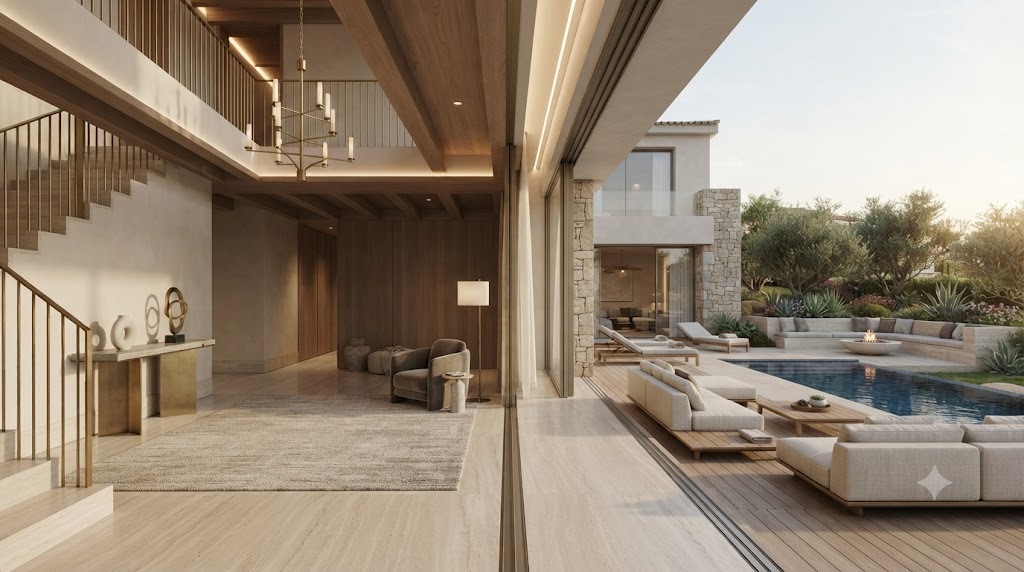
Few features define modern luxury villa design as clearly as a private courtyard. Whether it’s a shaded internal garden, a pool courtyard, or a covered veranda that blurs the line between inside and out, this feature gives a villa privacy without sacrificing natural light or airflow. Sliding glass walls, retractable roofing, and continuous flooring materials that run from interior to exterior all reinforce this seamless connection — a hallmark of high-end interior architecture planning.
3. Infinity Pools and Water Features
An infinity pool remains one of the most photographed, most requested elements in luxury villa design — and for good reason. Beyond the visual drama, a well-placed pool extends usable living space outdoors and often becomes the anchor around which the rest of the outdoor layout is planned. Reflecting pools, water walls, and koi ponds serve a similar purpose on tighter plots where a full infinity edge isn’t structurally feasible.
4. High-End, Honest Materials
Genuine opulence in luxury villa design rarely comes from flashy finishes — it comes from honest, high-quality materials used with restraint: natural stone, aged brass, solid timber, and hand-finished plaster. These materials age well, develop character over decades, and photograph beautifully in any lighting. Cheaper faux finishes might fool a first glance, but they rarely survive close inspection or years of daily use, which is why material selection is one of the most scrutinized parts of any villa project.
5. Spacious, Purposeful Room Proportions
Luxury isn’t just more square footage — it’s square footage used with intention. Higher ceilings, wider hallways, and generously proportioned primary suites all contribute to a sense of ease that cramped layouts can’t replicate, regardless of finish quality. This is where thoughtful space planning pays off: a villa can be large without feeling cavernous, or moderately sized while still feeling expansive, depending entirely on how proportions and sightlines are handled.
6. Smart Home Integration and Automation
Modern luxury villa design increasingly treats technology as invisible infrastructure rather than a novelty feature. Automated lighting scenes, integrated climate zoning, discreet security systems, and voice- or app-controlled fixtures all support comfort without cluttering the aesthetic. The best-executed smart homes are the ones you don’t notice — the lighting simply feels right, the temperature is simply comfortable, because the system is working quietly in the background.
7. Wellness and Spa-Inspired Spaces
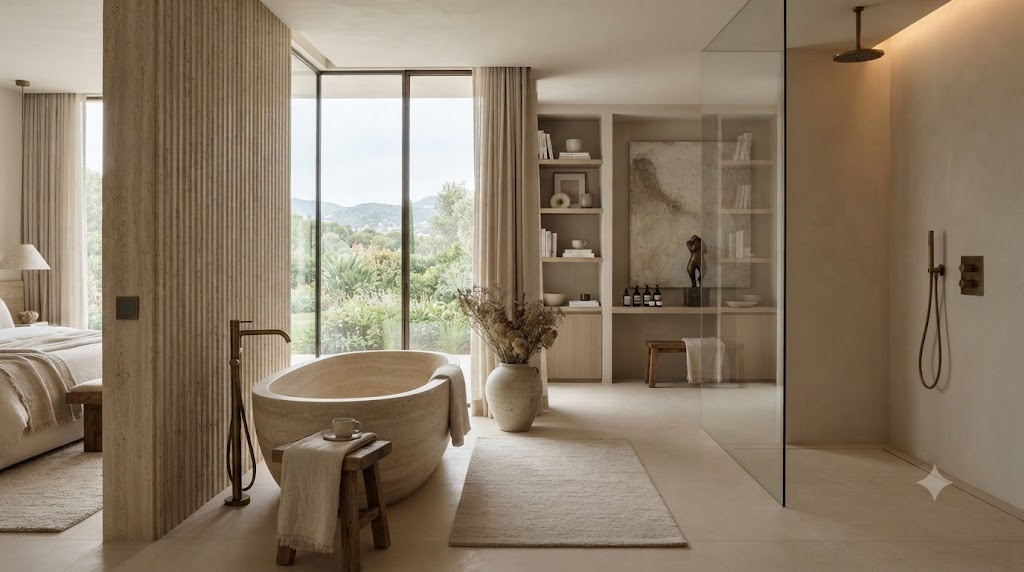
Private gyms, steam rooms, saunas, and spa-style primary bathrooms have moved from rare indulgence to near-standard expectation in luxury villa design. These spaces reflect a broader shift toward homes that support daily wellbeing, not just entertaining. A spa-style bathroom with natural stone, a soaking tub, and quality ventilation tends to have more lasting value to homeowners than an extra formal sitting room that rarely gets used.
8. Landscape as an Extension of the Architecture
A villa’s grounds are never an afterthought in serious design work — they’re planned alongside the building itself. Mature tree placement, water-wise planting, outdoor lounging areas, and considered pathways all extend the living experience beyond the walls. Our landscape design services are typically brought in at the same stage as the architectural concept, precisely because retrofitting a landscape after construction almost always looks disconnected from the house it surrounds.
9. Sustainable and Energy-Conscious Systems
High-end doesn’t have to mean high-consumption. Increasingly, luxury villa design incorporates solar integration, natural ventilation strategies, rainwater harvesting, and energy-efficient glazing — not as compromises, but as features that reduce long-term running costs while supporting a genuinely comfortable indoor climate. Sustainable design has quietly become one of the clearest markers of forward-thinking luxury, replacing purely decorative extravagance as a status signal.
10. Personalized, Story-Driven Design
The final and arguably most important feature is the hardest to template: a villa that reflects the specific life of the people living in it, rather than a generic luxury aesthetic pulled from a catalog. A wine cellar for a collector, a home studio for a musician, a library wing for an avid reader — these personal touches are what make a villa feel irreplaceable rather than merely expensive. Getting this right typically starts with a detailed construction consultation where lifestyle, not just square footage, drives the brief.
Visualizing Your Villa Before You Build
One advantage modern luxury villa design has over projects from even ten years ago is the ability to see the finished home before construction begins. Photorealistic 3D visualization and walkthroughs let homeowners walk through courtyards, test lighting scenarios, and adjust material choices digitally — catching costly mistakes on screen instead of on-site. For a project at this scale, skipping this step is one of the more expensive shortcuts an owner can take.
Budgeting for Luxury Villa Design
There’s no single number that applies across markets, plot sizes, and material choices, and any source that quotes one flat figure is oversimplifying. What’s consistent across most luxury villa design projects is where the money concentrates: structural work and premium glazing typically account for a significant share, followed by interior finishes, landscape development, and smart-home or wellness infrastructure. Owners planning a full renovation rather than new construction should also look into renovation and remodeling options, since upgrading an existing structure to villa-level finishes is often more cost-effective than starting from a bare plot.
Common Mistakes in Luxury Villa Design
- Chasing trends over timeless materials — finishes that look dated within five years cost more in the long run than classic choices.
- Underinvesting in landscape design — a stunning building surrounded by an afterthought garden undercuts the whole experience.
- Overlooking acoustics and privacy — open-plan luxury still needs zones where family members can retreat undisturbed.
- Adding smart features without a coherent system — disconnected gadgets create more friction than convenience.
- Skipping professional space planning — large footprints without intentional proportions can feel empty rather than grand.
Frequently Asked Questions About Luxury Villa Design
1. What defines luxury villa design? Luxury villa design is defined by intentional space planning, high-quality natural materials, indoor-outdoor integration, and personalized features — not simply square footage or cost.
2. How much does luxury villa design cost? Costs vary widely based on plot size, location, material choices, and level of customization. A professional consultation gives the most accurate estimate for a specific project.
3. What are the most important features of a luxury villa? Generous entryways, private courtyards, high-end materials, spa-inspired spaces, and personalized design elements consistently rank among the most valued features.
4. Is smart home technology necessary in luxury villa design? It’s increasingly expected rather than optional, particularly for lighting, climate control, and security, though the best systems are integrated discreetly rather than showcased.
5. How long does a luxury villa design project take? Depending on size, approvals, and construction complexity, a luxury villa project typically takes anywhere from ten months to over two years from concept to completion.
6. Can a smaller home still achieve a luxury villa design feel? Yes. Proportions, material quality, and lighting matter more than raw square footage — a modest-sized villa designed with intention can feel more luxurious than a larger, poorly planned one.
7. What role does landscape play in luxury villa design? Landscape is treated as an extension of the architecture, not a separate afterthought, and is usually planned alongside the building for a cohesive result.
8. Are sustainable features compatible with luxury villa design? Absolutely — solar integration, natural ventilation, and energy-efficient systems are now considered forward-thinking luxury features rather than compromises.
9. Should I hire an architect or an interior designer for a luxury villa? Most luxury villa projects benefit from both working together — an architect for structure and layout, and an interior designer for finishes, furniture, and ambiance.
10. What’s the difference between a luxury villa and a luxury house? A villa typically implies a standalone property with significant outdoor integration — courtyards, pools, and landscaped grounds — while a luxury house may not include the same land-based features.
11. How important is 3D visualization in luxury villa design? It’s highly valuable, letting homeowners preview layouts, lighting, and materials digitally before construction, which helps avoid expensive changes later.
12. What’s the biggest mistake people make in luxury villa design? Prioritizing trend-driven finishes and technology over timeless materials and thoughtful space planning, which tends to date the home faster and increase long-term costs.
Final Thoughts
Luxury villa design isn’t a checklist you can buy your way through — it’s a set of disciplined decisions repeated consistently, from the first sketch of the entryway to the choice of stone in a spa bathroom. The ten features above show up again and again in villas that still feel special ten years after completion, because they were built around how people actually live, not just how a space photographs on day one.
Planning a villa of your own? Explore Archtra’s residential architecture services or request a free consultation to start designing a home that holds up to real, everyday luxury.