Last Updated: August 2026
Quick Answer
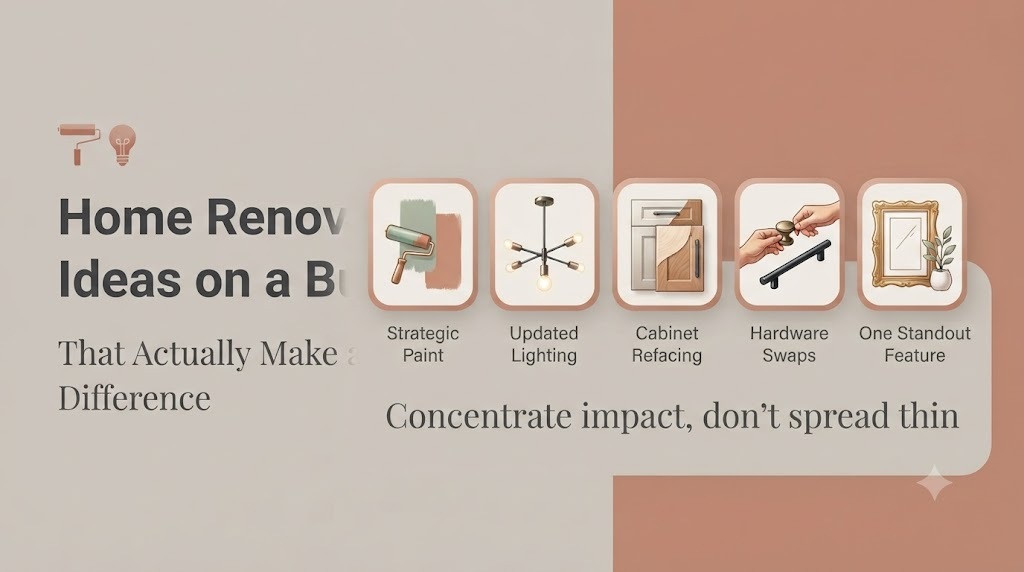
The home renovation ideas on a budget that deliver the most visible impact per dollar are strategic paint, updated lighting, cabinet refacing instead of full replacement, hardware swaps, and focused spending on one standout feature rather than spreading a limited budget thin across an entire room. In my experience, clients who concentrate their budget on a few high-impact changes consistently end up happier with the result than those who try to touch everything with the same limited funds.
Why Budget Renovations Deserve Real Strategy, Not Just Cost-Cutting
I’ve worked with plenty of clients who assume a “budget renovation” simply means doing a smaller version of an expensive renovation — cheaper materials, fewer finishes, a scaled-back version of the original vision. That’s usually the wrong approach. The renovations that actually feel successful on a limited budget aren’t scaled-down versions of an expensive plan; they’re built around a completely different strategy from the start — concentrated impact instead of spread-thin coverage.
The Core Principle Behind Every Good Budget Renovation
Before getting into specific ideas, I want to establish the single principle that matters most: spend where it’s seen and used most, save everywhere else. A kitchen island countertop upgrade matters more than a pantry’s interior finish. A well-designed entryway matters more than a rarely used guest bathroom. Identifying your home’s highest-impact zones before spending a single dollar is the difference between a budget renovation that feels intentional and one that feels obviously cut-rate.
Home Renovation Ideas on a Budget, Room by Room
Kitchen: The Room Where Budget Renovation Pays Off Most
- Reface cabinets instead of replacing them. If the cabinet boxes are structurally sound, refacing doors and drawer fronts costs a fraction of full replacement while delivering most of the visual impact.
- Swap hardware. New cabinet handles and knobs are one of the cheapest, highest-impact changes available — a genuinely underrated budget renovation idea.
- Paint cabinets rather than replace them. A professional-quality cabinet paint job can completely transform a dated kitchen for a small fraction of a full renovation.
- Update lighting fixtures. Pendant lights over an island or under-cabinet lighting dramatically change how a kitchen feels, at relatively low cost.
- Focus on one feature wall or backsplash upgrade rather than a full material overhaul throughout.
Bathroom: Small Space, Outsized Impact Potential
- Reglaze rather than replace the tub or tile, where the underlying surface is still structurally sound — this alone can save a significant portion of a bathroom renovation budget.
- Update the vanity and mirror rather than reconfiguring plumbing, which is one of the more expensive parts of any bathroom renovation.
- New fixtures — faucets, showerheads, towel bars — genuinely refresh a bathroom’s feel at low cost.
- Regrout tile if it’s discolored but otherwise intact, rather than assuming full retiling is necessary.
Living Areas: Where Paint and Lighting Do the Heaviest Lifting
- Paint remains the single highest-impact, lowest-cost renovation tool available, full stop. A well-chosen color can transform a room more dramatically than almost any other budget change.
- Layer lighting rather than relying on a single overhead fixture — a mix of ambient, task, and accent lighting makes a space feel considerably more finished without structural changes.
- Refinish existing hardwood floors instead of replacing them, if the wood underneath is in reasonable condition — refinishing costs meaningfully less than new flooring.
- Update window treatments. Simple, well-fitted curtains or blinds noticeably elevate a room’s finished appearance for relatively little cost.
Exterior and Curb Appeal: Don’t Overlook This on a Budget
- A freshly painted front door is consistently one of the best-value exterior updates available.
- Updated house numbers and exterior light fixtures are small, inexpensive changes that meaningfully affect first impressions.
- Simple landscaping refresh — mulch, trimmed hedges, a few well-placed plants — dramatically improves curb appeal without a major hardscaping investment.
Renovation Ideas That Consistently Waste Budget
Just as important as knowing what to spend on is knowing what to skip:
- Full structural changes to save on a single room’s finishes. Moving walls or plumbing is expensive — reserve structural budget for genuine functional problems, not aesthetic preference.
- Premium materials in low-visibility areas. Nobody notices premium flooring inside a closet.
- Trend-chasing finishes. Highly specific trend colors or materials risk feeling dated quickly, which is a particularly poor use of a limited renovation budget meant to last years.
- DIY on anything structural, electrical, or plumbing-related without proper expertise — mistakes here often cost more to fix than hiring it out correctly the first time would have.
Planning a Budget Renovation the Right Way
1. Get a Real Cost Estimate Before You Start
Vague budgeting is where renovation costs quietly spiral. A detailed, itemized estimate — even for a modest project — prevents the common trap of running out of budget halfway through and being left with an unfinished-looking result.
2. Prioritize Ruthlessly
List every change you’d like, then rank them by actual daily impact rather than personal excitement about a specific feature. The kitchen backsplash you’ll see every morning usually deserves priority over a guest bathroom upgrade you’ll rarely encounter.
3. Phase the Project If Necessary
A well-planned renovation can often be split into phases, tackling the highest-impact changes first and revisiting lower-priority items later as budget allows, rather than compromising quality across the board to fit everything into a single pass.
4. Know When a Small Professional Consultation Is Worth the Cost
Even on a tight budget, a short consultation with an architect or designer before major decisions can prevent costly mistakes — a poorly planned layout change, for instance, can waste far more money than the consultation itself would have cost. If you’re weighing a more substantial change against a full renovation, our guide on renovation vs rebuild walks through how to judge when a budget renovation genuinely makes sense versus when the underlying structure needs more serious attention.
When a Budget Renovation Isn’t the Right Call
If your home has underlying structural, plumbing, or electrical issues, a purely cosmetic budget renovation risks becoming money spent on a surface-level fix over a deeper problem. It’s worth getting a proper assessment before committing budget to finishes if you have any doubt about what’s underneath them. Our Interior Architecture team can help assess whether a targeted budget renovation genuinely addresses your goals, or whether a more comprehensive plan would actually serve you better long-term.
Final Thoughts
The most successful home renovation ideas on a budget aren’t about doing less everywhere — they’re about being deliberate about where the money actually goes. Concentrate spending on high-visibility, high-use areas, skip premium finishes where they won’t be seen, and resist the urge to touch every room with a limited budget spread too thin. Done with real strategy, a budget renovation can feel every bit as intentional and finished as a much larger one.
If you’re planning a renovation and want help figuring out where your specific budget will make the biggest difference, our team can walk through your priorities before you spend a single dollar on materials.
Frequently Asked Questions
What is the most cost-effective home renovation idea? Fresh paint is consistently considered the highest-impact, lowest-cost renovation available, capable of transforming a room’s feel more dramatically than almost any other budget-friendly change.
How can I renovate my kitchen on a budget without replacing cabinets? Refacing cabinet doors and drawer fronts, repainting existing cabinets, updating hardware, and improving lighting are all effective ways to refresh a kitchen’s appearance without the cost of full cabinet replacement.
Should I renovate my whole house at once or do it in phases? Phasing a renovation, starting with the highest-impact areas and revisiting lower-priority spaces later, is often a more effective use of a limited budget than spreading funds thinly across an entire home at once.
Is it worth hiring an architect for a small budget renovation? Even a short consultation can be worthwhile, since it can help avoid costly layout or planning mistakes that would otherwise waste more of your budget than the consultation itself costs.
What renovation upgrades typically don’t add much value on a budget? Premium materials in low-visibility areas, highly specific trend-driven finishes, and structural changes made purely for aesthetic preference rather than functional need tend to offer poor returns on a limited renovation budget.