There’s a particular feeling you get running your hand along a hand-carved banister versus a machine-milled one — a faint irregularity, a warmth, a sense that a real person shaped it. That feeling is exactly what artisan craftsmanship brings back into homes that would otherwise be indistinguishable from a hundred others built the same year. At Archtra, we’ve noticed a clear shift over the past few design cycles: clients who once wanted flawless, factory-perfect finishes are now specifically asking for the opposite — visible brushstrokes, hand-joined timber, and metalwork that carries the faint signature of the person who forged it. This isn’t nostalgia. It’s a deliberate reaction to a decade of mass-produced luxury that started to feel identical from house to house. This article looks at why artisan craftsmanship has become one of the defining features of high-end residential design, where it shows up most effectively, and how homeowners can actually incorporate it without turning a project into an unmanageable custom-order marathon.
Why Artisan Craftsmanship Is Having a Moment in Luxury Design
For years, “luxury” was shorthand for precision — perfectly matched veneers, laser-cut inlays, seamless factory finishes. That kind of polish is still valuable, but it’s also now widely available at nearly every price point, which has quietly eroded its status as a marker of real exclusivity. Artisan craftsmanship reintroduces scarcity in a way mass production simply can’t replicate: a hand-thrown ceramic tile, a bespoke iron gate, or a joinery detail cut by hand takes time, skill, and a human maker who can’t be duplicated at scale. Homeowners investing in a luxury villa design increasingly treat handcrafted elements as the difference between a house that photographs well and a home that feels genuinely irreplaceable.
What “Artisan Craftsmanship” Actually Means in Residential Design
It’s worth being precise here, because the term gets used loosely. Artisan craftsmanship refers to design elements made substantially by hand or with hand-guided tools, by a skilled maker with specialized training — as opposed to elements produced entirely through automated manufacturing. It doesn’t mean everything in the home must be handmade; it means specific, carefully chosen moments — a staircase, a front door, a fireplace surround — are given to a craftsperson rather than a factory line. The contrast is what makes it work. A home that’s entirely handcrafted can feel busy or inconsistent; a home with two or three deliberate artisan touches against a clean architectural backdrop feels curated and intentional.
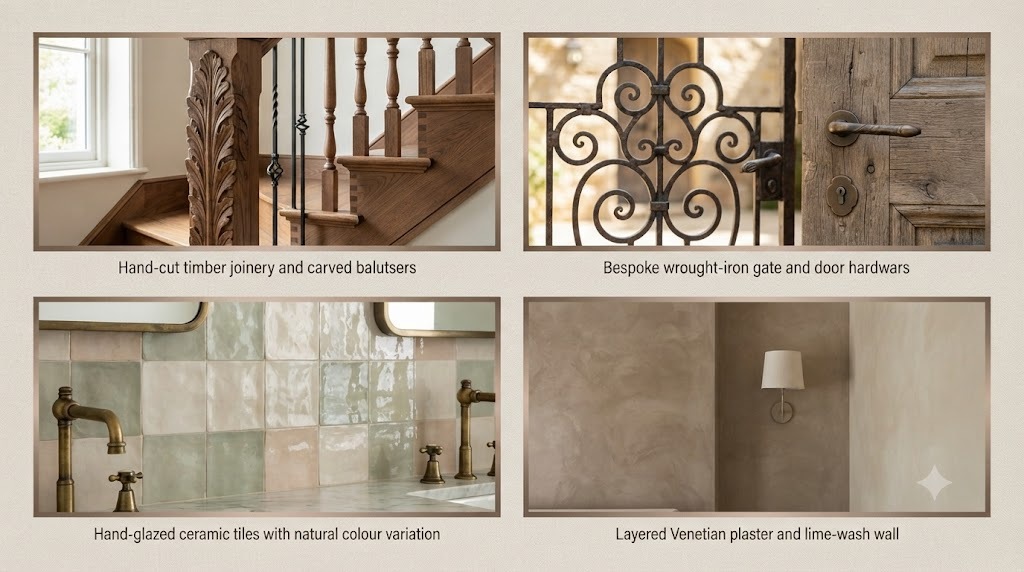
Where Artisan Craftsmanship Shows Up Most Effectively
1. Hand-Carved Woodwork and Joinery
Staircases, ceiling beams, built-in cabinetry, and door frames are some of the most rewarding places to invest in artisan craftsmanship, because they’re touched, viewed, and lived with daily. Hand-cut dovetail joints, carved balusters, and traditional joinery techniques — some passed down through generations of woodworkers — bring a texture and depth that CNC-milled equivalents can approximate but never quite match. This kind of detail pairs naturally with the broader material honesty we cover in our interior architecture approach, where material choice is treated as a design decision rather than a finishing touch.
2. Bespoke Metalwork
Wrought-iron gates, hand-forged door hardware, custom balustrades, and sculptural light fixtures are where a skilled blacksmith or metalworker can transform an otherwise standard architectural element into a genuine focal point. Unlike cast or stamped metal, hand-forged pieces carry subtle asymmetries — a slightly uneven curve, a visible hammer mark — that signal authenticity in a way few homeowners can articulate but almost everyone notices.
3. Artisan Tile and Ceramic Work
Hand-glazed zellige tile, hand-painted ceramic murals, and small-batch terracotta have become defining features in high-end kitchens and bathrooms precisely because of their imperfections — slight variations in glaze thickness and colour that no two tiles share exactly. This is a detail worth planning early in space planning, since hand-made tile often requires longer lead times and different installation tolerances than factory-uniform product.
4. Hand-Finished Plaster and Wall Treatments
Techniques like Venetian plaster, tadelakt, and lime-wash finishes are applied by trained plasterers who build up texture and depth over multiple hand-worked layers. The result reflects light differently than flat paint, giving rooms a warmth and subtle movement that’s difficult to describe until you’ve stood in one. This is a relatively cost-efficient way to introduce artisan craftsmanship at scale across an entire home, since walls cover far more surface area than joinery or tile.
5. Custom Textiles and Upholstery
Hand-woven rugs, custom embroidery, and artisan-upholstered furniture bring craftsmanship into the softer, more tactile layers of a home. Many luxury projects now commission textiles directly from regional weavers or small ateliers, both for the quality difference and for the story it gives a space — a rug woven specifically for a room carries a different weight than one pulled from a catalog.
6. Sculptural Staircases and Architectural Features
A staircase is one of the few architectural elements guests interact with directly, making it a natural showcase for artisan craftsmanship. Hand-forged railings, custom stone treads, and bespoke timber detailing turn a purely functional element into a signature piece — often the single most photographed feature in the entire home.
The Craftsmanship-Meets-Technology Balance
It’s a common misconception that artisan craftsmanship and modern technology are opposites. In practice, the strongest projects blend both: 3D visualization lets designers and craftspeople preview how a hand-carved detail will interact with lighting and surrounding materials before a single cut is made. Our 3D visualization and walkthroughs service is regularly used this way — not to replace the craftsperson’s hand, but to make sure their work integrates seamlessly with the architecture around it, avoiding costly rework after an artisan has already invested weeks into a piece.
Why Artisan Craftsmanship Adds Long-Term Value
Handcrafted details tend to hold their value — and their appeal — far longer than trend-driven finishes. A hand-forged staircase railing installed today will likely still look distinguished in twenty years, while a mass-produced equivalent may look dated within five. This durability of style, separate from the durability of the material itself, is one of the more overlooked financial arguments for artisan craftsmanship in a renovation and remodeling project. Homeowners often recover more of this investment at resale than they expect, precisely because handcrafted elements are difficult and expensive for a future owner to replicate.
Sustainability and Ethical Sourcing in Artisan Craftsmanship
Artisan craftsmanship also tends to align naturally with sustainable building practices. Hand-worked materials are frequently sourced locally and in smaller batches, reducing transportation emissions and supporting regional trade skills that might otherwise disappear. Many architects now treat craftsmanship sourcing as part of the broader sustainability conversation alongside energy efficiency and material selection — not a separate, purely aesthetic consideration.
How to Incorporate Artisan Craftsmanship Without Overspending
You don’t need to hand-craft an entire home to benefit from this trend. A few practical approaches:
- Choose two or three “hero” details — a staircase, a front door, a fireplace surround — rather than spreading a handcrafted budget too thin across the whole house.
- Commission early, not last — skilled artisans often have long lead times, so these elements need to be planned during early construction consultation, not bolted on after construction is already underway.
- Pair handcrafted elements with clean architectural backgrounds — a single artisan feature stands out more against a restrained, uncluttered setting than when surrounded by competing decorative details.
- Work with regional makers where possible — local artisans often reduce cost and lead time compared to importing specialty work internationally, while adding a sense of place that’s harder to fake.
- Budget for maintenance, not just installation — handcrafted finishes like lime-wash plaster or unlacquered brass age and patina over time, which is usually desirable but should be a conscious choice, not a surprise.
Artisan Craftsmanship Across Different Home Styles
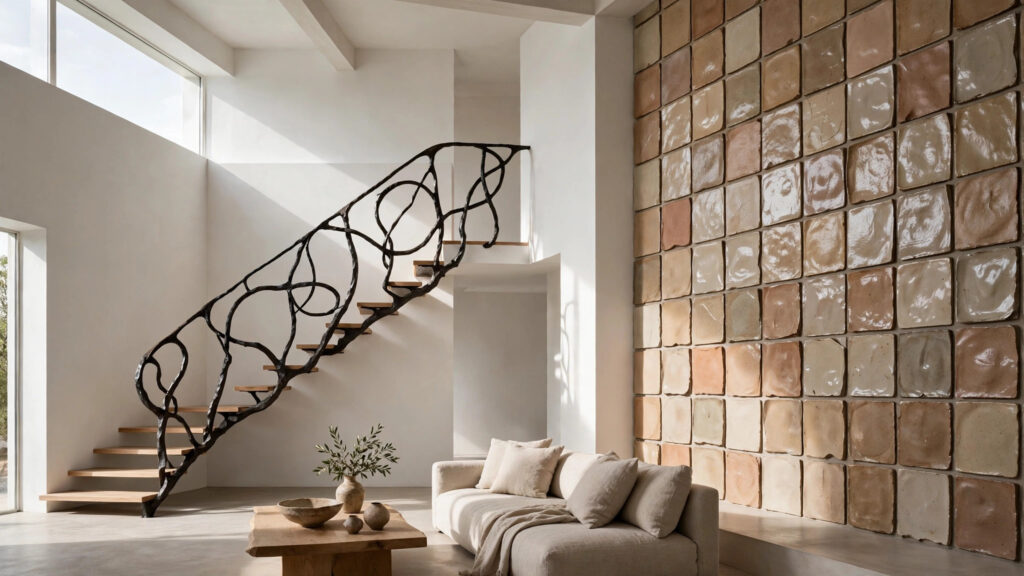
Handcrafted details aren’t limited to traditional or rustic aesthetics — they show up just as powerfully in contemporary and minimalist homes, often in more restrained form. A minimalist kitchen might feature a single hand-thrown ceramic backsplash tile as its only ornamental gesture. A modern villa might reserve craftsmanship entirely for a sculptural staircase, keeping every other surface deliberately clean. This flexibility is part of why artisan craftsmanship pairs so well with a wide range of residential architecture styles rather than being confined to one design language.
Common Mistakes When Adding Artisan Craftsmanship
- Overcrowding a space with too many handcrafted elements, which can read as cluttered rather than curated.
- Skipping proper lead-time planning, leading to rushed work or last-minute compromises.
- Mixing too many craft traditions in one room without a unifying material or colour palette.
- Underestimating maintenance needs for living finishes like patinated metal or lime plaster.
- Treating craftsmanship as purely decorative, rather than integrating it with the architecture and landscape as a whole — including the way it connects to outdoor spaces through thoughtful landscape design.
Frequently Asked Questions About Artisan Craftsmanship in Luxury Homes
1. What is artisan craftsmanship in home design? Artisan craftsmanship refers to design elements made substantially by hand or hand-guided tools by a skilled maker, rather than produced entirely through automated manufacturing.
2. Why are luxury homes moving toward handcrafted details? Mass-produced finishes have become widely available at nearly every price point, so handcrafted details now signal genuine exclusivity and personal investment in a way factory finishes no longer can.
3. Is artisan craftsmanship more expensive than standard finishes? Generally yes, due to the time, skill, and lead time involved, though costs vary widely depending on material, maker, and scope — a few carefully chosen features are more common than fully handcrafted homes.
4. Where should I invest in artisan craftsmanship first? Staircases, front doors, fireplace surrounds, and kitchen tile work tend to offer the most visual and daily-use impact for the investment.
5. Does artisan craftsmanship work in modern or minimalist homes? Yes — in fact, a single handcrafted feature often stands out more powerfully against a clean, restrained modern backdrop than in a busier, more ornamental setting.
6. How long does commissioning artisan work usually take? Lead times vary by craft and maker but can range from several weeks to several months, which is why craftsmanship should be planned early in the design process.
7. Is artisan craftsmanship more sustainable than mass production? Often, yes — hand-worked materials are frequently sourced locally and in smaller batches, reducing transportation impact and supporting regional trade skills.
8. Do handcrafted details require special maintenance? Some do — living finishes like unlacquered brass or lime-wash plaster naturally patina over time, which many homeowners consider part of their appeal rather than a drawback.
9. Can artisan craftsmanship increase a home’s resale value? It often does, since handcrafted elements are difficult and costly for future owners to replicate, giving a property a distinctive character that ages well.
10. How do I find skilled artisans for a home project? Working with an experienced architecture or design firm is usually the most reliable route, since they typically maintain relationships with vetted craftspeople across multiple trades.
11. Should artisan craftsmanship be used throughout an entire home? Not necessarily — most successful projects reserve handcrafted details for a few carefully chosen “hero” elements rather than spreading them across every surface.
12. What’s the difference between artisan craftsmanship and custom-made furniture? Custom-made furniture can be produced by machine to a client’s specifications, while artisan craftsmanship specifically implies significant hand-working by a trained maker, giving each piece subtle individual character.
Final Thoughts
Artisan craftsmanship isn’t a passing trend so much as a correction — a return to valuing the human hand in an industry that spent a decade chasing flawless, replicable finishes. The homes that feel truly luxurious today are rarely the ones with the most expensive materials; they’re the ones with a handful of details a skilled maker actually shaped, layered thoughtfully against clean, well-planned architecture. Whether it’s a hand-forged railing or a single hand-glazed tile, these details are what make a home feel unmistakably one-of-a-kind.
Thinking about where handcrafted details could elevate your own project? Explore Archtra’s residential architecture services or request a free consultation to start planning a home built around genuine craftsmanship.