If you’ve ever stood in a half-finished room, pointed at a blank wall, and asked yourself “wait, what does an architect actually do here?” — you’re not alone. Most homeowners only hire an architect once or twice in a lifetime, so the role stays a bit of a mystery until you’re in the middle of a project. This guide breaks down exactly what an architect does, why the role matters more than most people realize, and — just as important — how to work with an architect so the relationship actually pays off instead of turning into a source of stress.
We wrote this the way we’d explain it to a friend over coffee, not the way a textbook would. If you’re relocating to a new city, renovating a historic home, or building from the ground up, understanding the architect’s role is the single best thing you can do before you sign a contract with anyone.
What Does an Architect Do, Exactly?
At the most basic level, an architect translates a vague idea — “I want a bright, open kitchen” or “I want this old Charleston single house to feel modern but still historic” — into a buildable, code-compliant design. But that one-sentence answer hides a lot of ground.
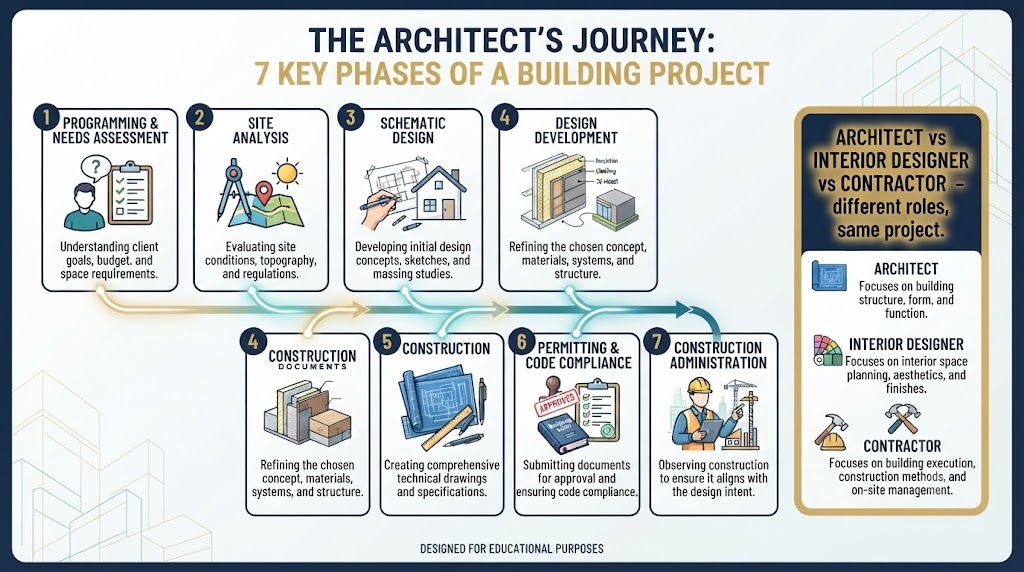
A licensed architect typically handles:
- Programming and needs assessment — figuring out how you actually live, work, or operate a business, before a single line is drawn
- Site analysis — studying sun orientation, drainage, flood zones, soil conditions, and neighborhood context
- Schematic design — early sketches and 3D massing that establish the big moves: layout, scale, and flow
- Design development — refining those sketches into real floor plans, elevations, and material choices
- Construction documents — the detailed technical drawings a contractor actually builds from
- Permitting and code compliance — navigating zoning, historic district review boards, and building codes
- Construction administration — site visits, answering contractor questions, and making sure what gets built matches the design intent
That last point surprises a lot of first-time clients. A good architect doesn’t disappear after handing over blueprints — they stay involved through construction, catching problems before they become expensive change orders.
Architecture is as much a technical discipline as a creative one. An architect has to understand structural loads, mechanical systems, egress requirements, and accessibility standards well enough to coordinate with engineers, even though the engineers do the detailed calculations. Think of the architect as the conductor of an orchestra of specialists — structural engineers, MEP (mechanical, electrical, plumbing) consultants, interior designers, and landscape architects all have to play from the same sheet music, and the architect is usually the one holding the score.
If you’re weighing whether your project even needs full architectural services or something lighter, it’s worth browsing what a full-service firm typically covers — Archtra’s architecture and design services page is a good example of how these services get scoped for residential and commercial clients alike.
Architect vs. Designer vs. Contractor: Why the Distinction Matters
A common source of confusion is lumping “architect,” “interior designer,” and “general contractor” together. They’re not interchangeable, and knowing the difference will save you money and headaches.
- An architect is licensed to design buildings, ensure structural and code compliance, and — in most states — stamp drawings for permit.
- An interior designer focuses on the finishes, furnishings, and livability of interior spaces, often working alongside an architect rather than instead of one.
- A contractor is the licensed builder who physically constructs the project from the architect’s documents.
For projects that blend all three — say, a full home renovation with custom millwork and a redesigned floor plan — firms increasingly offer combined interior architecture services so the design stays cohesive from structure down to cabinet hardware.
Why Hiring an Architect Is Worth It (Even When It Feels Optional)
Plenty of small renovations don’t legally require an architect. So why hire one anyway? A few honest reasons:
- They see problems before they’re expensive. Catching a structural issue or a zoning conflict on paper costs a fraction of catching it mid-construction.
- They protect your resale value. Thoughtful architectural design — good proportions, natural light, logical flow — tends to hold up better on the market than a purely contractor-driven renovation.
- They manage complexity you can’t see. Permitting, historic district approval, and code compliance are full-time jobs in themselves.
- They give your contractor a clear roadmap. Ambiguity during construction is where budgets blow up. Detailed architectural drawings reduce guesswork and change orders.
This is especially true in historic or design-sensitive markets. If you’re buying or renovating in a protected neighborhood, an architect familiar with local review boards can be the difference between a smooth approval and months of delay — something worth understanding before you fall in love with a listing in Charleston’s premier neighborhoods.
How to Work With an Architect: A Step-by-Step Guide
Knowing what an architect does is only half the equation. Knowing how to work with an architect — how to communicate, what to expect at each phase, and how to keep the relationship productive — is what actually determines whether your project goes smoothly.
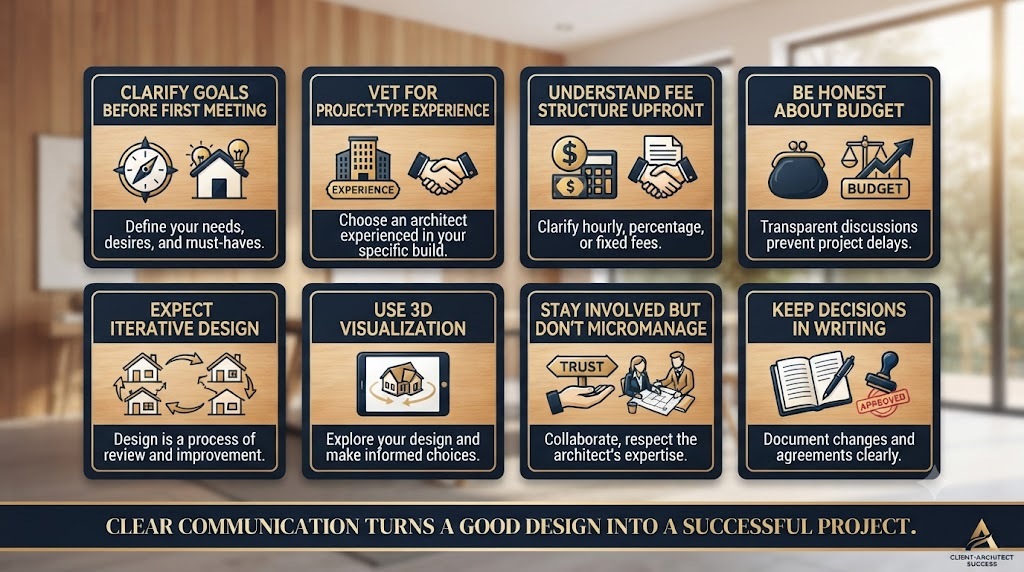
1. Get Clear on Your Goals Before the First Meeting
Architects can’t read minds. Before you reach out, jot down your must-haves, nice-to-haves, rough budget, and timeline. Bring photos of spaces you love (and ones you hate). The clearer your brief, the less time — and money — you’ll spend on early revisions.
2. Vet the Right Architect for Your Project Type
Not every architect specializes in every project. Someone brilliant at ground-up custom homes may not be the right fit for a boutique hotel renovation, and vice versa. Ask to see a portfolio of comparable work. If your project leans commercial, look for a firm with dedicated commercial architecture experience; if it’s hospitality-driven — a restaurant, inn, or short-term rental — a firm with hospitality architecture chops will understand guest flow and licensing requirements you might not think to ask about.
3. Understand the Fee Structure Up Front
Architects typically bill in one of a few ways: a percentage of construction cost (often 8–15% for residential work), a flat fee, or hourly. Ask which structure applies, what’s included, and what counts as an additional service (extra site visits, major scope changes, rendering packages, etc.). A good architect will walk you through this without you having to pry.
4. Communicate Constraints Honestly — Including Budget
The single biggest driver of a good architect-client relationship is honesty about budget. Architects who don’t know your real number will design something you can’t afford, and then everyone loses time reworking it. State your range clearly, even if it feels uncomfortable.
5. Expect an Iterative Design Process
Design isn’t a one-shot delivery. Expect several rounds of schematic sketches, feedback, and refinement before drawings move to construction documents. Give specific, honest feedback (“the kitchen feels cramped” is more useful than “I don’t love it”) — architects work best with concrete input, not vague vibes.
6. Use Visualization Tools to Confirm Intent
Ask whether the architect offers 3D renderings or walkthroughs before construction starts. Seeing a space in three dimensions — rather than reading a flat floor plan — catches misunderstandings early. Firms offering 3D visualization and walkthroughs let clients essentially “walk through” a home before a single wall goes up, which is one of the most effective ways to avoid costly surprises later.
7. Stay Involved (But Don’t Micromanage) During Construction Administration
Once construction begins, the architect’s role shifts to oversight: site visits, answering contractor RFIs (requests for information), and reviewing submittals. As the client, you’ll get periodic updates. Trust the process, but don’t hesitate to ask questions — a good architect welcomes an engaged client far more than a passive one.
8. Keep Communication in Writing
Verbal changes get lost. Whenever a decision is made in a phone call or site visit, follow up with a short email summary. This protects both you and the architect, and it keeps the paper trail clean if disputes arise later.
Common Mistakes People Make When Working With an Architect
- Hiring based on price alone. The cheapest bid is rarely the cheapest project once change orders pile up.
- Skipping the site visit. An architect who hasn’t walked your property or neighborhood is working with incomplete information.
- Changing scope mid-design without adjusting the budget. Every addition has a cost, even a “small” one.
- Assuming the architect handles permitting alone. You’ll often need to sign applications, attend hearings, or provide documentation — ask early what’s expected of you.
- Not asking about timeline realistically. Design and permitting can take months, especially in historic districts. Build that into your relocation or move-in plans.
If you’re relocating to a new city and building or renovating as part of that move, it helps to line up your architectural timeline against your broader plans — Archtra’s relocation guide is a useful companion resource for exactly that kind of planning.
What to Bring to Your First Architect Consultation
- A rough budget range (even approximate)
- Photos or a Pinterest/Houzz board of styles you like
- Lot survey or property documents, if you have them
- A list of must-haves versus nice-to-haves
- Your realistic timeline, including any hard deadlines
Coming prepared signals to the architect that you’re a serious, organized client — and it genuinely speeds up the early design phases.
Final Thoughts: The Architect as Translator and Advocate
At its core, the architect’s job is translation — turning your lifestyle, budget, and site into a design that actually works in the real world, and then advocating for that design through permitting and construction. Understanding what an architect does, and how to work with an architect collaboratively rather than transactionally, is what separates a smooth project from a stressful one.
Whether you’re evaluating a current property listing with renovation potential or starting a custom build from scratch, the earlier you bring an architect into the conversation, the more options — and the more value — you’ll have to work with.
Frequently Asked Questions
1. What does an architect do on a day-to-day basis? An architect’s day can range from sketching design concepts and running client meetings to reviewing construction documents, visiting job sites, and coordinating with structural and MEP engineers. No two days look exactly alike, especially in small to mid-sized firms.
2. How is an architect different from a structural engineer? An architect designs the overall building — layout, aesthetics, function, and code compliance — while a structural engineer calculates and certifies that the load-bearing elements (foundations, beams, framing) will safely support the design. They work together, but they are licensed separately and hold different responsibilities.
3. Do I need an architect for a small renovation? Not always. Cosmetic updates (paint, flooring, fixtures) usually don’t require one. But if you’re moving walls, changing the footprint, or altering structural elements, an architect helps avoid code violations and structural mistakes.
4. How much does it cost to work with an architect? Fees vary widely by region and project complexity, but residential architects commonly charge 8–15% of total construction cost, a flat fee for defined scopes, or hourly rates for smaller consultations. Always get the fee structure in writing before starting.
5. How long does the architectural design process take? For a custom home, expect roughly 3–6 months for design phases alone, before permitting and construction begin. Renovations in historic districts or areas with strict zoning review can take longer due to approval boards.
6. What’s the difference between an architect and an interior designer? An architect focuses on structure, layout, code compliance, and the building envelope. An interior designer focuses on finishes, furniture, lighting, and the livability of interior spaces. Many projects benefit from both working together from the start.
7. Can an architect help with permitting and zoning issues? Yes — this is a core part of the job. Architects prepare and often submit permit documents, respond to plan review comments, and, in historic districts, present designs to architectural review boards on the client’s behalf.
8. What should I look for when choosing an architect? Look at portfolio relevance (have they done similar project types?), communication style, fee transparency, and references from past clients. A strong personality fit matters more than people expect — you’ll be working closely together for months.
9. Does an architect stay involved after construction starts? A good architect typically offers construction administration services — periodic site visits, answering contractor questions, and reviewing submittals — to make sure the finished project matches the approved design.
10. Is it worth hiring an architect for a historic home renovation? Almost always yes. Historic properties often come with strict design review requirements, unusual structural quirks, and material-matching challenges that a general contractor alone typically isn’t equipped to navigate.
Related reading: Architectural Styles Explained: Modern, Brutalist & Art Deco · Modern Farmhouse Front Elevation: 2026 Guide · Browse the full blog