Interior designers near me is a search that usually happens at an awkward moment. You’ve just bought a place, outgrown the one you have, or spent two years looking at a half-finished living room. Whatever brought you here, the next step is the same. You need a designer who understands how you live, not just how a room looks in photographs. This guide covers how to build a shortlist, what the work really costs, and how to hire well whether you’re in Delhi, Dubai or Dallas.
Why Searching for Interior Designers Near Me Still Matters
Video calls have made it possible to hire a designer on another continent, so you might wonder why “near me” still matters. It matters because a good interior is built from things that don’t travel well over a screen. Daylight changes by the hour and by the direction your windows face. Local humidity decides whether timber warps. Your city’s suppliers, carpenters and building rules shape what’s practical and what only works in a magazine.
When you type interior designers near me, you’re really asking for someone who already knows those local conditions. A designer who has worked in your climate has seen which finishes peel in monsoon season and which paints chalk under strong sun. They also know which fabricators deliver on time. That knowledge saves money, and you rarely find it in a portfolio.
Interior Designer, Decorator or Architect: Who Do You Actually Need?
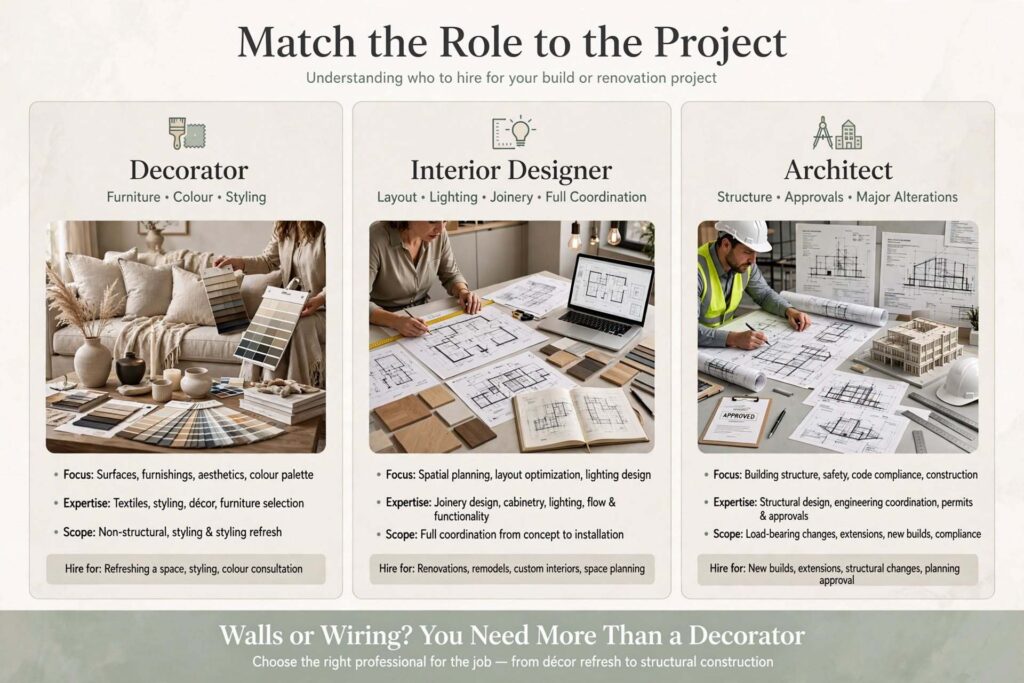
People use these titles interchangeably, and that leads to expensive mismatches.
- A decorator works on the surface: furniture, colour, textiles, styling. They generally don’t move walls or redesign layouts.
- An interior designer plans the whole space, including layout, lighting, joinery, materials and how everything is built and sequenced.
- An architect designs the structure itself and handles approvals, load-bearing changes and major alterations.
If your project touches plumbing, wiring, partition walls or custom cabinetry, you need more than a decorator. Studios that combine both disciplines make this easier, because the interior and the building are designed together. You can see how that works in practice on Archtra’s interior architecture page, or browse the full list of services to see where your project fits.
How to Find the Best Interior Designers Near Me
The best interior designers near me rarely turn up on the first page of anything by luck. You’ll get better results from a structured search than from scrolling.
Start with portfolios, not star ratings
Ratings tell you whether clients were pleased. Portfolios tell you whether you will be. Look for finished projects similar in size, budget and style to yours. Then check whether the designer’s work looks varied or whether every room looks the same. Some people love a signature look, but if you want your own taste reflected, range matters. Archtra’s portfolio and project pages show the kind of detail worth looking for: plans, material choices and finished photographs together.
Ask how they handle budget and process
A designer who can’t explain their process in plain language will struggle to run it on site. Ask what happens in the first month, how revisions are handled, and who coordinates with contractors. A clear studio process, such as discovery, concept, development and delivery, is a good sign.
Meet before you pay
Book a first conversation, in person or on video, before signing anything. Pay attention to how they listen. A designer who asks about your mornings, your cooking habits and where your kids do homework is working toward your home. One who opens with their favourite finishes is working toward their portfolio. You can also read about the people behind a studio on pages like Meet Our Team.
What Interior Designers Near Me Charge
Fees vary widely by city, scope and experience, so treat any figure you read online as a rough guide and ask for quotes. When comparing interior designers near me, make sure you’re comparing the same fee model, because a low quote under one model can cost more than a high quote under another.
| Fee model | How it works | Best suited for |
|---|---|---|
| Hourly | You pay for time spent | Small consultations, single-room advice |
| Flat fee | One agreed price for a defined scope | Clear, contained projects |
| Per square foot or metre | Rate multiplied by area | Full homes and offices with fixed layouts |
| Percentage of project cost | Fee tied to total build and furnishing spend, often quoted in the 10 to 20 percent range | Large renovations with changing scope |
| Cost-plus | Designer buys items and adds a margin | Furniture-heavy projects |
Two cautions. First, ask what’s excluded. Drawings, 3D visuals, site visits and procurement are sometimes billed separately. Second, remember that design fees are separate from construction and furnishing costs. If you’re planning a bigger structural job, the article on architectural designs and what they cost will help you budget the whole project, not just the design stage.

Match the Specialist to the Space
Not every designer is equally good at every type of project. A studio brilliant at family apartments may not be the right fit for a restaurant, and the reverse is true too.
- Homes and apartments: Look for experience with storage, lighting and layouts for daily routines.
- Offices and retail: You want someone who understands circulation, acoustics and brand. See commercial architecture for how that approach differs.
- Hotels, cafes and restaurants: Guest experience, durability and maintenance drive the brief. Archtra’s hospitality architecture work is a useful reference point.
Green Flags and Red Flags When You Compare Designers
After a few meetings, the differences become obvious. When you compare interior designers near me, these signals matter more than any sales pitch.
Green flags
- They show drawings and material samples, not just styled photographs.
- They give a written scope, timeline and payment schedule.
- They talk openly about what could go wrong.
- They can name past clients you’re free to contact.
Red flags
- Pressure to sign or pay a large advance on the first meeting.
- Vague answers about who does the on-site supervision.
- A fee that’s much lower than every other quote, with no explanation.
- No written contract.
Hiring Remotely: A Practical Option for Global Clients
Not everyone can find a strong local studio, and some projects, like a holiday home or a family property you’re renovating from abroad, are far away by nature. Remote design works well when it’s set up properly. The key is visualisation. With realistic 3D renders and walkthroughs, you can walk through a room before a single wall is painted and catch problems early. Archtra offers 3D visualization and walkthroughs for exactly this reason.
If you’re relocating, our relocation guide is a good place to start thinking about how a new city affects your home, your commute and your budget. Even when you hire remotely, a local contractor and a trusted site representative are non-negotiable, so ask any designer how they coordinate work from a distance.
A Realistic Timeline
Rushed timelines are the most common reason projects overshoot. As a rough guide, allow a few weeks for briefing and concept, another few for detailed drawings and material selection, and then the build itself, which depends on scale. A single room might take weeks. A full home can take many months. Ask your shortlisted interior designers near me what they assume about approvals, lead times for custom furniture and weather, since all three cause delays.
How to Prepare Before Your First Meeting
You’ll get more from the first conversation if you arrive prepared. Bring:
- A rough budget, including a buffer of 10 to 15 percent for surprises.
- Photos of spaces you like and, just as useful, spaces you dislike.
- A list of daily frustrations with your current layout.
- Floor plans or measurements, if you have them.
- A clear idea of your deadline and why it matters.
Looking for inspiration while you prepare? The Archtra blog covers practical topics such as colour choices in kitchens and movable kitchen islands, and you can browse all of it on the blog home.
Choosing From Interior Designers Near Me: The Short Version
Pick based on fit, not flash. The right designer has relevant finished work, a transparent fee, a clear process and the patience to listen. Shortlist three, meet them, compare written scopes, and only then decide. If you’d like to talk through a project, you can reach the Archtra team through the contact page, and you’ll find quick answers on the FAQ page.
Frequently Asked Questions
1. How do I find reliable interior designers near me?
Begin with portfolios of finished projects similar to yours, then check references and reviews on more than one platform. Ask friends or neighbours who’ve recently renovated. Once you have three names, meet each one and request a written scope and fee. Reliable designers are comfortable sharing contracts and past client contacts.
2. How much do interior designers near me charge?
It depends on location, scope and the designer’s experience. Fees may be hourly, flat, per area, or a percentage of the project cost. Because the models differ, ask each designer for a written quote and exactly what it includes, then compare like with like instead of headline numbers.
3. Is it worth hiring an interior designer for a small apartment?
Often, yes. Small spaces leave little room for mistakes, and clever storage, lighting and layouts can change how large a home feels. Even a one-off consultation can help you avoid costly purchases that don’t fit.
4. What is the difference between an interior designer and an interior decorator?
A decorator focuses on furnishings, colour and styling. An interior designer also plans layouts, lighting, joinery and construction details, and coordinates the people who build them. If walls, wiring or plumbing will change, you want a designer.
5. Can I work with a designer who is in another city or country?
Yes, if the studio has a solid remote process: video briefings, detailed drawings, 3D visualisation and a local contractor or site representative. The main risk is poor site supervision, so ask exactly who will oversee the work on the ground.
6. How long does an interior design project take?
A single room can take a few weeks, while a full home often takes several months, depending on approvals, custom furniture lead times and the contractor’s schedule. Ask for a written timeline with milestones, and expect it to move slightly.
7. What should I ask during a first meeting?
Ask about their process, who manages the site, how revisions work, what’s included in the fee, and how they handle budget overruns. Also ask to see a project that went wrong and how they solved it. Their answer reveals more than a polished portfolio.
8. Do interior designers help with the budget?
Good ones do. They can steer spending toward things that matter, such as lighting, storage and durable materials, and away from items that add cost without value. A designer who refuses to discuss your budget openly is a warning sign.
9. Should I pick a designer who specialises in my style?
Specialisation can help, but check range as well. A designer who’s strong in your preferred style and also solid on planning and detailing will give you a better result than one who only repeats a signature look.
10. How do I know if a designer is the right fit for me?
Trust the conversation. If they ask thoughtful questions, explain trade-offs plainly and respect your budget, that’s a good start. If you feel rushed or talked over before signing, that tends to continue once the work begins.