Walk into any home built or renovated this year, and you’ll notice something has quietly shifted. The stark, all-white, almost clinical minimalism of the last decade is giving way to something softer, richer, and far more livable. Warm minimalist home design is the design language of 2026 — a style that keeps the clean lines and clutter-free philosophy of minimalism but wraps it in natural materials, layered textures, and a warm neutral color palette that actually feels like home. If you’ve ever stood in a beautiful minimalist space and thought “this looks amazing, but I couldn’t relax here,” warm minimalism is the answer you’ve been waiting for.
At Archtra, we’ve watched this shift happen in real time across our residential projects, and this guide breaks down exactly what warm minimalist home design means, why it’s dominating 2026, and how you can bring it into your own space — room by room.
What Is Warm Minimalist Home Design?
Warm minimalist home design is an interior and architectural approach that blends the simplicity of traditional minimalism with the comfort and richness of natural, tactile elements. Instead of stark white walls and glossy surfaces, warm minimalism favors soft neutrals, raw wood, linen, stone, and handcrafted details. The goal isn’t emptiness — it’s intentionality. Every object in the room earns its place, but the overall feeling is inviting rather than austere.
This approach borrows heavily from Scandinavian and Japanese design traditions, which is why you’ll often hear it discussed alongside Japandi style interiors. But warm minimalism is its own distinct movement, one that prioritizes emotional comfort as much as visual restraint. It’s minimalism that has learned to be cozy.
Why Warm Minimalist Home Design Is the Defining Trend of 2026
A few converging forces have pushed warm minimalist home design to the front of interior trends this year:
- Post-pandemic homebound culture made comfort non-negotiable. People no longer want homes that photograph well but feel cold to live in.
- Sustainability awareness has driven demand for natural materials home design over synthetic, mass-produced finishes.
- Sensory overload from digital life has created a craving for calm, tactile, screen-free environments.
- Wellness-focused living, closely tied to biophilic design, has made homeowners prioritize natural light, plants, and organic textures.
Our team explored many of these same forces in our breakdown of modern architecture design trends, where warm, human-centered spaces consistently outperformed cold, ultra-modern aesthetics in client satisfaction surveys.
Core Elements of Warm Minimalist Home Design
To recreate this trend authentically, it helps to understand its building blocks.
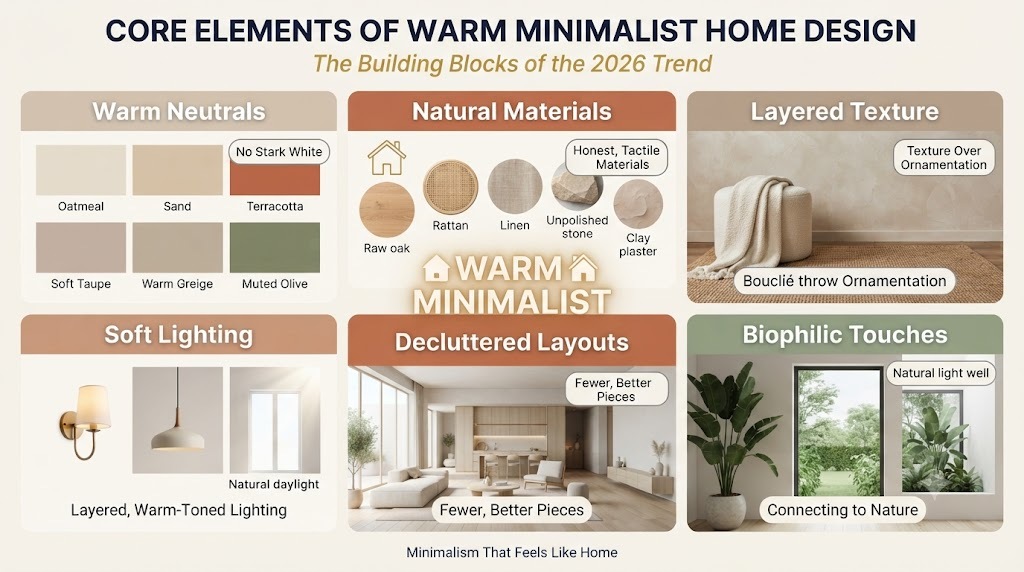
1. A Warm Neutral Color Palette
Forget stark white. Warm minimalism leans on warm neutral home decor tones — think oatmeal, sand, terracotta, soft taupe, warm greige, and muted olive. These earthy tones interior design choices create depth without visual noise.
2. Natural, Honest Materials
Raw oak, rattan, linen, wool, unpolished stone, and clay finishes define this look. Natural materials home design isn’t just an aesthetic choice — it’s about bringing texture and imperfection back into spaces that had become too sterile. Our interior architecture team frequently sources these materials for clients specifically requesting this softer, more organic finish.
3. Layered Texture Instead of Ornamentation
Textured minimalism replaces decorative clutter with tactile variety — a bouclé throw, a jute rug, a plastered wall. Texture does the visual work that patterns and knick-knacks used to do.
4. Soft, Diffused Lighting
Warm minimalist spaces avoid harsh overhead lighting in favor of layered, warm-toned lighting — wall sconces, pendant fixtures, and generous natural daylight.
5. Decluttered, Purposeful Layouts
The minimalist backbone remains: fewer, better pieces; open sightlines; and storage that keeps daily life hidden but accessible. This is where thoughtful residential architecture design planning matters as much as the decor itself.
6. Biophilic Touches
Indoor plants, natural light wells, and views to greenery round out the warmth, connecting warm minimalist home design to the broader biophilic design movement.
Warm Minimalist Living Room Ideas
The living room is usually where warm minimalism makes its first impression. A minimalist living room design in this style typically features a low-profile sofa in a warm neutral fabric, a solid wood coffee table, a jute or wool area rug, and one or two statement natural-material lighting fixtures. Keep wall art sparse but meaningful — a single large piece often works better than a gallery wall. If you’re planning a full layout, our commercial architecture and residential teams both apply the same “less but warmer” philosophy across scales, from boutique offices to family homes.
Warm Minimalist Kitchen and Dining Design
Kitchens are embracing warm minimalism through handle-less oak cabinetry, honed stone countertops, and warm brass or matte black fixtures instead of chrome. Open shelving displays a curated set of ceramics rather than a packed pantry. Dining spaces pair simple wooden tables with woven-seat chairs, letting natural grain and craftsmanship replace decorative excess. This is one of the areas we most often redesign for clients moving away from stark, all-white kitchens toward something that photographs beautifully and feels lived-in.
Warm Minimalist Bedroom Design Ideas
A minimalist bedroom design built around warmth typically starts with layered natural bedding — linen or cotton in warm ivory or clay tones — paired with a low wooden bed frame and minimal, soft-edged nightstands. Blackout curtains in a natural fabric weave, a single woven pendant light, and one textured rug underfoot complete the look. The result is a room designed for genuine rest, not just visual minimalism.
Sustainable Materials Fueling the Warm Minimalist Movement
Sustainable home design and warm minimalism are deeply intertwined in 2026. Reclaimed wood, low-VOC clay plasters, natural fiber textiles, and locally sourced stone reduce environmental impact while reinforcing the organic, tactile feel the style depends on. Many of our recent projects, including those featured in our sustainable and contemporary residential work, integrate these materials from the earliest design stage rather than as a finishing touch.
Warm Minimalism vs. Traditional Minimalism vs. Japandi
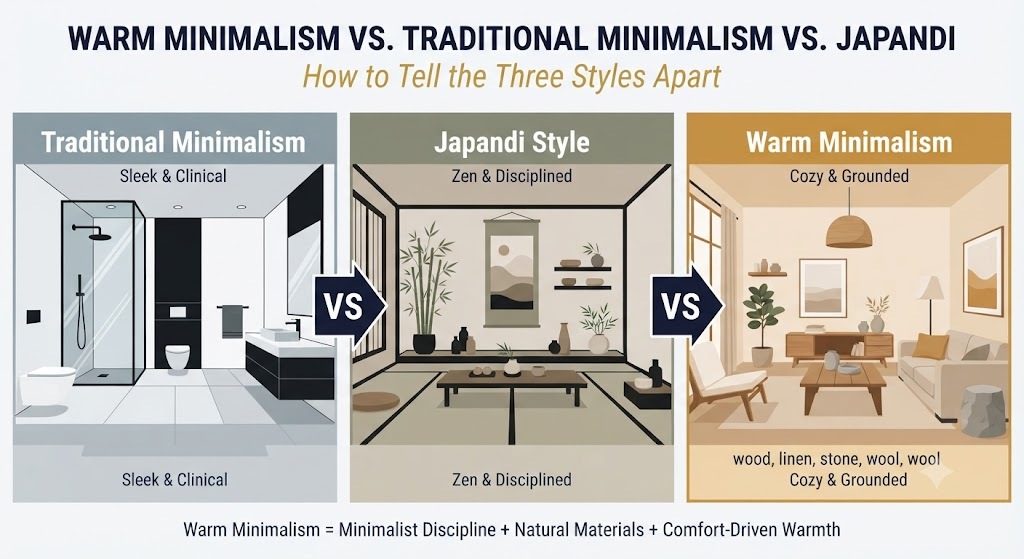
It’s easy to confuse these three styles, so here’s a quick comparison:
| Style | Color Palette | Materials | Overall Feel |
|---|---|---|---|
| Traditional Minimalism | Stark white, black, grey | Glass, glossy laminate, metal | Sleek, clinical |
| Japandi Style | Muted neutrals, black accents | Wood, bamboo, ceramic | Zen, disciplined |
| Warm Minimalism | Sand, taupe, terracotta, olive | Wood, linen, stone, wool | Cozy, grounded |
Warm minimalism essentially takes the discipline of traditional minimalism, borrows the material honesty of Japandi style interiors, and adds an extra layer of comfort-driven warmth.
How to Transition Your Home Into Warm Minimalist Style
You don’t need a full renovation to adopt warm minimalist home design principles. Start with these steps:
- Edit before you decorate. Remove anything that doesn’t serve a function or bring genuine joy.
- Swap cool whites for warm neutrals on walls and large furniture pieces.
- Introduce one natural material per room — a wood shelf, a stone vase, a linen throw.
- Replace harsh lighting with warm-toned bulbs and layered fixtures.
- Add one biophilic element, such as a large indoor plant or improved natural light access.
- Consult a professional if you’re planning structural changes — our architecture and interior design services can help translate this trend into a full home plan rather than a surface-level refresh.
Common Mistakes to Avoid With Warm Minimalist Home Design
- Confusing “warm” with “cluttered.” The minimalist discipline still applies — every piece must earn its place.
- Using fake or synthetic textures that mimic wood or stone instead of the real thing, which undermines the tactile authenticity the style depends on.
- Overusing one tone, resulting in a flat, monochrome room instead of layered warmth.
- Neglecting lighting design, which is often the difference between a warm minimalist space and a merely beige one.
How Archtra Brings Warm Minimalist Home Design to Life
At Archtra, warm minimalist home design isn’t a passing aesthetic — it’s an extension of our broader philosophy that architecture should feel as good as it looks. From material selection to lighting plans and spatial flow, our designers integrate this trend into full residential and commercial projects. You can browse examples of this approach across our portfolio of completed projects and see how warm, natural, minimalist principles translate into real, livable spaces.
If you’re ready to bring this trend into your own home, our team can guide you from concept to completion — combining the calm structure of minimalism with the comfort your family actually wants to live in.
Frequently Asked Questions About Warm Minimalist Home Design
1. What exactly is warm minimalist home design? It’s an interior design approach that combines minimalist simplicity — clean lines, decluttered spaces, purposeful furniture — with warm, natural materials and a soft neutral color palette, creating a cozy rather than clinical feel.
2. How is warm minimalism different from regular minimalism? Traditional minimalism often relies on stark whites, glossy finishes, and cool tones. Warm minimalism keeps the same “less is more” discipline but replaces cold materials with wood, linen, wool, and warm neutral shades.
3. Is warm minimalist home design expensive to achieve? Not necessarily. Because the style relies on fewer, better-quality pieces rather than volume, many homeowners find it more cost-effective long-term than maximalist or trend-heavy decorating.
4. What colors work best for a warm minimalist home? Sand, oatmeal, warm greige, terracotta, soft taupe, and muted olive are staples of a warm neutral color palette that defines this trend.
5. Is warm minimalism the same as Japandi style? They’re closely related but not identical. Japandi style interiors blend Japanese and Scandinavian design specifically, while warm minimalism is a broader movement that can draw from multiple traditions, always centered on comfort and natural materials.
6. What materials are essential for warm minimalist interiors? Raw or lightly finished wood, linen, wool, rattan, clay plaster, and natural stone are core materials that give the style its signature texture and warmth.
7. Can warm minimalist design work in small apartments? Yes — in fact, it’s especially effective in smaller spaces because decluttered layouts and light, warm tones help rooms feel larger and calmer.
8. How does lighting affect warm minimalist home design? Lighting is critical. Warm-toned, layered lighting (rather than harsh overhead lights) reinforces the cozy, grounded atmosphere that separates warm minimalism from colder, traditional minimalist spaces.
9. Does warm minimalism support sustainable home design goals? Absolutely. Its reliance on natural, durable, often locally sourced materials aligns closely with sustainable home design principles, reducing reliance on synthetic, short-lifespan finishes.
10. How do I start transitioning my home to this style without a full renovation? Begin by decluttering, switching to warmer neutral tones on major surfaces, introducing one or two natural-material pieces per room, and upgrading your lighting temperature.
11. Will warm minimalist home design still be relevant after 2026? Because it’s rooted in timeless materials and genuine comfort rather than fast-changing decor fads, most designers — including our team at Archtra — expect this style to remain influential well beyond 2026.
12. Should I hire a professional for a full warm minimalist home renovation? For structural changes, lighting redesign, or whole-home material planning, working with an experienced architecture and interior design studio ensures the warmth and minimalism stay balanced rather than tipping into clutter or blandness.
Looking to bring warm minimalist home design into your own space? Get in touch with Archtra to start planning a home that’s as comfortable as it is beaut