Scrolling through vague “curb appeal ideas” articles gets old fast when what you actually want is a real, specific list of exterior paint color combinations for houses you can hold up against your own home and picture immediately. That’s exactly what this page is: 30-plus named, ready-to-use palettes, organized by aesthetic category, each with a body, trim, door, and accent breakdown so you’re not left guessing how the pieces fit together.
If you want the deeper reasoning behind why certain exterior paint color combinations for houses work better than others — fixed-element matching, color theory, climate considerations, testing methods — our companion piece, Exterior Paint Color Combinations: Complete Guide, covers that in full. This page is built to be the fast, visual reference you come back to once you already understand the fundamentals and just want real options to compare.
Table of Contents
- How to Use This List
- Classic & Timeless Combinations
- Modern & Bold Combinations
- Farmhouse & Rustic Combinations
- Coastal & Light Combinations
- Warm & Earthy Combinations
- Dark & Dramatic Combinations
- Quick Tips Before You Commit
- Frequently Asked Questions
How to Use This List
Every entry below follows the same simple structure: Body (the dominant color, roughly 60% of the visible exterior), Trim (window frames, fascia, and architectural detailing), Door (your accent opportunity), and Best for (the house styles and situations each combination tends to suit best). Before picking a favorite, hold it up against your home’s fixed elements — roofing, brick, stone, or driveway — since even a beautiful combination can clash if it fights against something you can’t change. For a full walkthrough of that matching process, see our complete guide to exterior paint color combinations.
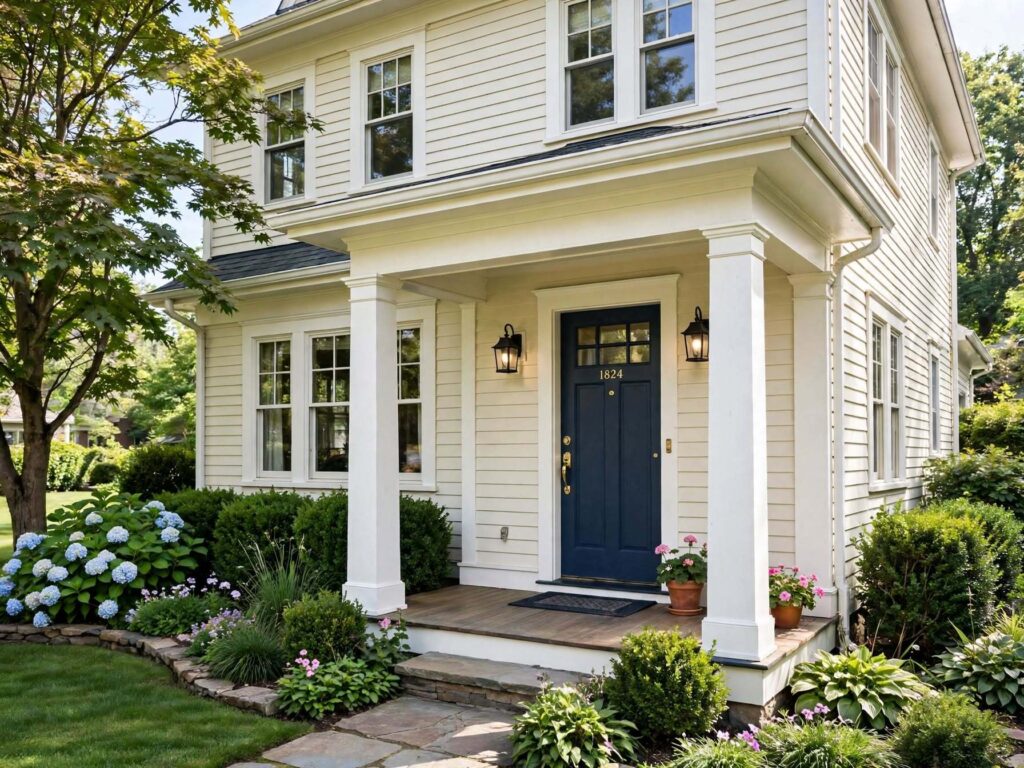
Classic & Timeless Combinations
These exterior paint color combinations for houses have stayed popular for decades because they flatter nearly every architectural style and hold strong resale appeal.
- Crisp White + Black Trim + Black Door — the most universally flattering combination on this list; works on Colonial, Craftsman, and Modern homes alike.
- Soft White + Charcoal Trim + Deep Red Door — a slightly warmer take on the white-and-black formula, with a classic pop of color at the entry.
- Warm Greige + Cream Trim + Navy Door — a resale-friendly neutral base with just enough personality at the front door.
- Light Gray + White Trim + Black Door — cool, clean, and dependable; a strong choice for Colonial and Traditional homes.
- Pale Yellow + White Trim + Forest Green Door — a softer, more historic-feeling palette well suited to older or heritage-style homes.
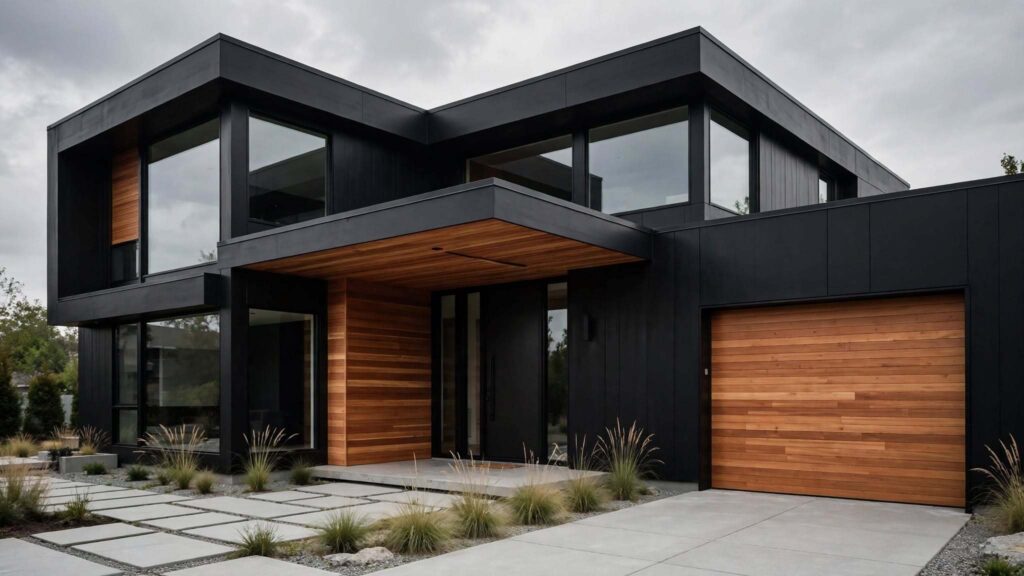
Modern & Bold Combinations
For Contemporary and Modern architecture, where clean lines benefit from confident, often monochromatic color choices.
- Charcoal Gray + Matte Black Trim + Wood-Tone Door — a moody, architecturally striking combination that lets natural wood do the accent work.
- Deep Graphite + Graphite Trim (Near-Monochrome) + Bold Yellow Door — minimal contrast on the body, maximum contrast at the entry.
- Warm Taupe + Black Window Frames + Black Door — a softer alternative to stark charcoal, still reading as distinctly modern.
- Cool White + Black Metal Trim + Glass/Black Door — pairs especially well with large-format windows and minimal architectural detailing.
- Concrete Gray + White Trim + Burnt Orange Door — an unexpected accent color that works surprisingly well against a cool, industrial-leaning base.
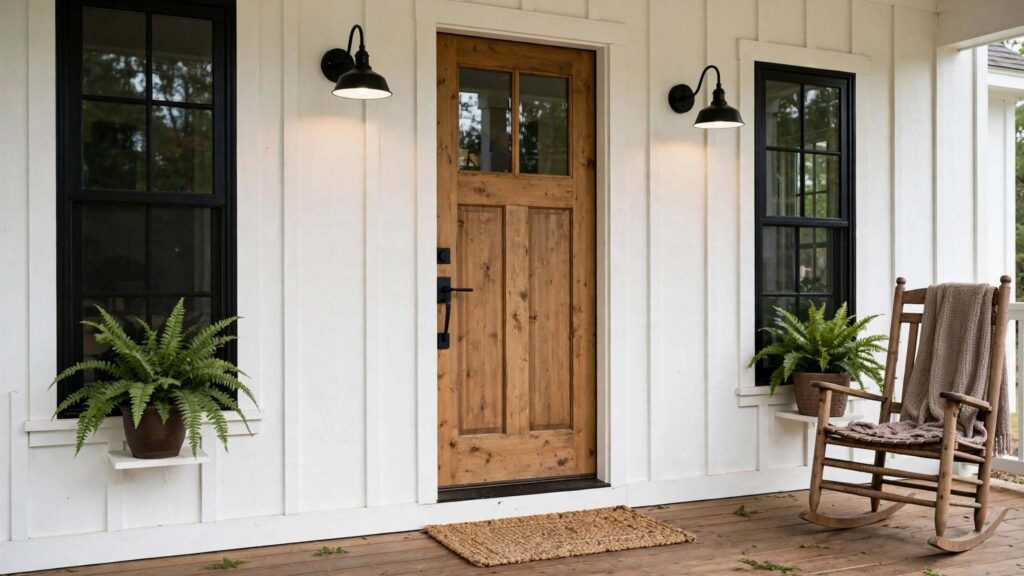
Farmhouse & Rustic Combinations
Some of the most searched exterior paint color combinations for houses fall into this category, thanks to the enduring popularity of the modern farmhouse look.
- Classic White + Black Trim + Black Door (the farmhouse staple) — board-and-batten siding paired with black window frames and a black door.
- Warm Cream + Weathered Wood Trim + Sage Green Door — softer and slightly more traditional than the stark black-and-white version.
- Dove Gray + White Trim + Natural Wood Door — a gentle, versatile combination for farmhouse homes with wraparound porches.
- Off-White + Black Shutters + Red Door — a nod to more traditional rural farmhouse color schemes.
- Light Taupe + Cream Trim + Deep Green Door — earthy and grounded, well suited to homes surrounded by greenery.
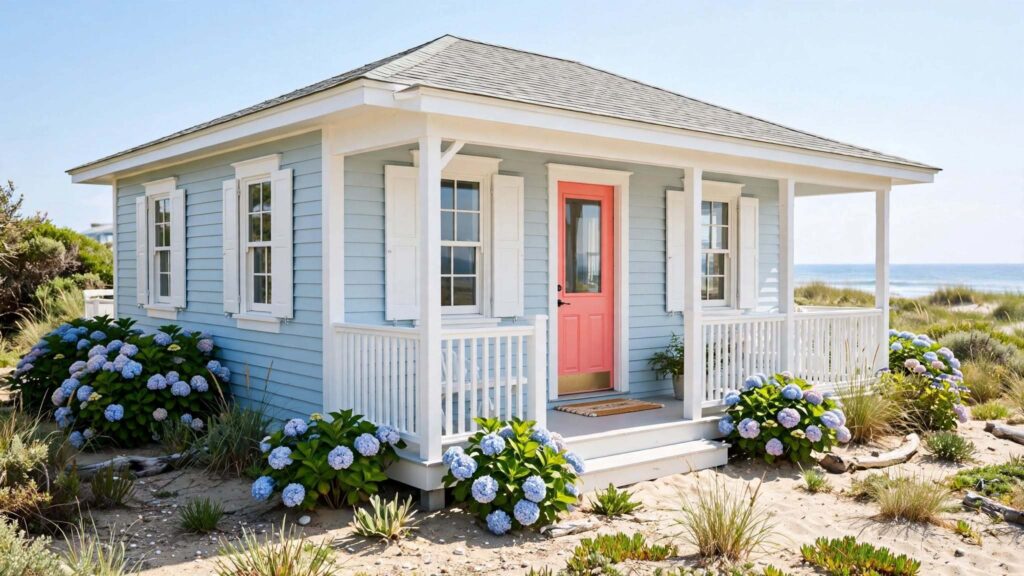
Coastal & Light Combinations
Bright, breezy exterior paint color combinations for houses near the water — or for anyone chasing that permanent-vacation feeling.
- Soft Sky Blue + White Trim + White Door — the quintessential coastal cottage combination.
- Crisp White + Navy Shutters + Navy Door — nautical without leaning into kitsch.
- Pale Seafoam Green + White Trim + Driftwood-Tone Door — a slightly more subdued, sophisticated coastal option.
- Sandy Beige + White Trim + Turquoise Door — a warmer coastal palette with one bold accent moment.
- Light Gray-Blue + White Trim + Coral Door — playful without overwhelming the rest of the facade.
Warm & Earthy Combinations
Particularly well suited to Mediterranean, Spanish, and Southwestern-style homes, or anyone drawn to a warmer palette overall.
- Warm Terracotta + Cream Trim + Deep Brown Door — a Mediterranean staple that works beautifully with stucco exteriors.
- Soft Clay + White Trim + Wood-Tone Door — a gentler, more neutral take on the terracotta palette.
- Warm Sand + Espresso Trim + Espresso Door — grounded and sophisticated, especially against desert or dry-climate landscaping.
- Muted Ochre + Cream Trim + Turquoise Door — a Southwestern-leaning combination with a distinctive accent color.
- Warm Taupe + Cream Trim + Deep Rust Door — subtle, warm, and adaptable across several architectural styles.
Dark & Dramatic Combinations
Bold exterior paint color combinations for houses that want to stand out — best suited to homes with strong architectural lines and, as covered in our full guide, worth extra consideration in very hot, high-sun climates due to heat absorption.
- Deep Navy + White Trim + Brass Hardware Accents — striking, classic, and surprisingly versatile across Colonial and Craftsman homes.
- Matte Black + Natural Wood Trim + Wood Door — dramatic and architectural, especially effective on Modern homes.
- Forest Green + Cream Trim + Black Door — rich and grounded, especially attractive against wooded or rural surroundings.
- Deep Charcoal + Black Trim (Monochrome) + Wood Door — nearly monochromatic, letting architectural form carry the visual interest.
- Espresso Brown + Cream Trim + Deep Red Door — warm-toned darkness that reads as cozy rather than severe.
- Slate Blue + White Trim + Black Door — a softer alternative to navy, still confidently dark.
Quick Tips Before You Commit
A few fast reminders before locking in any of the exterior paint color combinations for houses above:
- Always test a large swatch outdoors in real daylight, not just a small chip — colors shift significantly once scaled up across a full facade.
- Check your fixed elements first — roofing, brick, and stone all carry undertones that need to work with, not against, your chosen palette.
- Consider your climate, particularly for darker combinations, since heat absorption and fading vary meaningfully by region.
- Confirm HOA approval if applicable, before finalizing any color choice.
For the full reasoning behind each of these considerations, our complete guide to exterior paint color combinations walks through the process in depth, including a breakdown by architectural style and specific climate guidance.
Frequently Asked Questions
1. What are the most popular exterior paint color combinations for houses right now? White or cream bodies paired with black trim and a black or bold-colored front door remain the most consistently popular combination across architectural styles, largely because the contrast reads as clean and timeless rather than trend-dependent.
2. Which exterior paint color combinations for houses add the most resale value? Classic, broadly appealing palettes — soft neutrals with black, navy, or gray trim — tend to appeal to the widest range of buyers and are generally considered the safest resale-friendly choices, compared to highly saturated or unconventional combinations.
3. What color combination works best for a small house? Lighter body colors paired with a single contrasting trim color tend to make smaller homes feel larger and more open, while very dark, heavy palettes can sometimes visually shrink a smaller facade.
4. Are dark exterior paint color combinations a good idea in hot climates? They can work, but darker colors absorb more heat and may fade faster under intense, prolonged sun exposure. If you love a dark palette in a hot climate, ask your painter about heat-reflective or high-durability exterior formulations.
5. What’s a good exterior paint color combination for a house with a red brick foundation? Warm-toned palettes — cream, warm taupe, or soft greige with cream or brown trim — tend to complement red brick far better than cool grays or blues, which can visually clash with brick’s warm undertone.
6. How do I choose between a bold and a neutral exterior color combination? If you plan to sell within the next few years, a neutral, broadly appealing combination is generally the safer choice. If you’re staying long-term and want your home to stand out, a bolder combination — like a deep navy or forest green — can be a rewarding, more personal choice.
7. What door color pairs well with a gray house? Black, navy, and deep red doors are among the most popular and reliable choices against gray siding, all offering strong, clean contrast without clashing with gray’s cool undertone.
8. Can I mix warm and cool tones in one exterior paint color combination? It’s generally best to stay within one undertone family (warm or cool) across your main body and trim colors, reserving any tonal contrast for a single accent element like the front door, to avoid an unintentionally clashing result.
9. How many exterior paint color combinations should I compare before deciding? Narrowing down to three to five real contenders, then testing large outdoor swatches of each against your home’s fixed elements, tends to produce a more confident final decision than comparing dozens of options only in photos or on a screen.
10. Do exterior paint color combinations need to match my interior design style? Not strictly, but choosing a combination that reflects your home’s overall architectural and interior style tends to feel more cohesive. Our interior design styles guide is a useful reference if you’re still narrowing down your overall aesthetic direction.
Final Thoughts
With 30-plus real exterior paint color combinations for houses to compare, the fastest path forward is narrowing this list down to your top three or four favorites, then testing large swatches of each directly against your home’s fixed elements in natural daylight. From there, the decision usually becomes much clearer than it felt at the start.
If you’re planning a bigger exterior refresh alongside your paint update — new siding, an addition, or updated architectural details — our team at Archtra can help design the whole exterior cohesively. Browse our project portfolio for real examples, or reach out to our design team to start planning your home’s exterior.